What Is an Affiliate Storefront? A Plain Guide for Creators
Published 6 min read
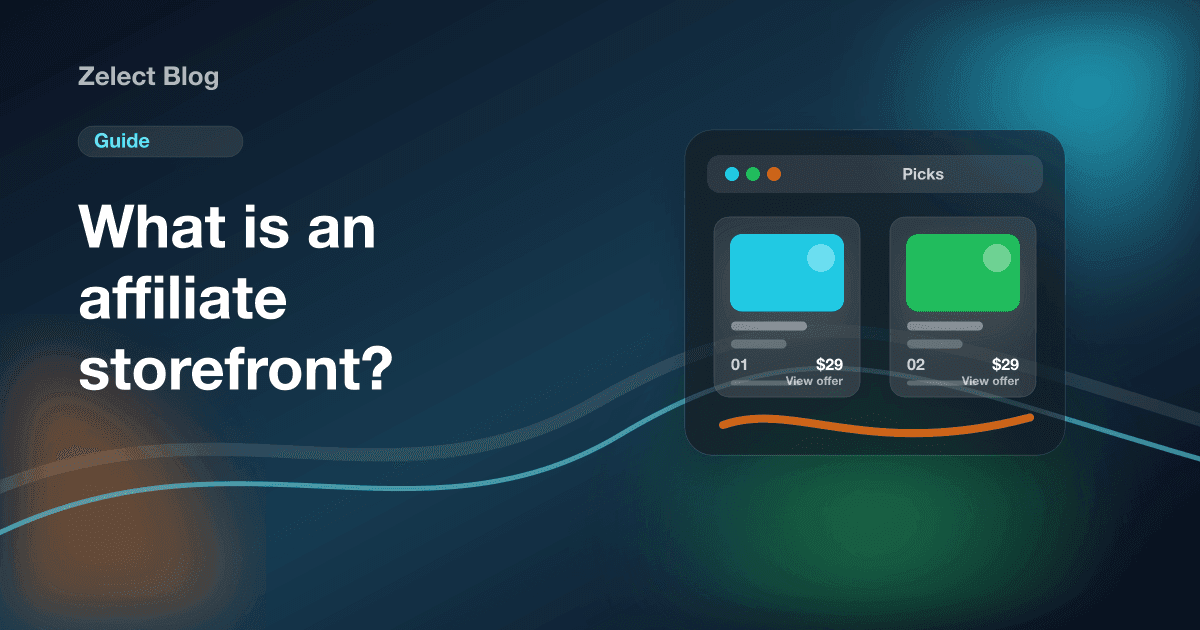
An affiliate storefront is a web page that shows the products you recommend as cards with a photo and a price. Each card has a button that sends the visitor to the retailer through your affiliate link. The retailer handles checkout and pays you a commission. Your storefront only does the showing and the sorting.
How does an affiliate storefront work?
It starts with an affiliate program. You join one, say Amazon Associates or Shopee's program, and it gives you a tracked link for each product. If you haven't picked yet, this comparison of affiliate programs for creators is a good place to start.
You then add each product to your storefront with its tracked link. A follower taps your bio link, browses the cards, taps "buy" and lands on the retailer's product page with your tag attached. If they buy within the program's tracking window, the retailer credits the sale to you.
Two things follow from this setup.
First, you never handle payments. Shipping and order support stay with the retailer too.
Second, you don't control the price or the stock. When the retailer changes either one, your card can go stale. A storefront you update every week or two stays useful. One you set up and forget slowly fills with dead links.
Commission rates and tracking windows vary by program and by category. Check each program's current rate table instead of trusting a number you saw in a video.
How is a storefront different from a link in bio?
A link-in-bio page is a list of buttons. A storefront is a catalog. Both live behind the single link your social profile allows, but they answer different questions for the visitor.
A list tells people where to find you. A catalog answers "what was that serum you used?" and lets the visitor see the product before they tap.
| Link list | Affiliate storefront | Your own online store | |
|---|---|---|---|
| What the visitor sees | Text buttons | Product cards with image and price | Product pages with cart |
| Organization | One long column | Categories, product pages, search | Full catalog |
| Who runs checkout | Whatever you link to | The retailer | You |
| Inventory and shipping | None | None | Yours to handle |
| Works for 50+ products | Gets hard to scan | Yes | Yes |
| Best for | Profiles, newsletter, a few offers | Creators who recommend many products | Selling your own goods |
Many link-in-bio tools now add product blocks, so the line is blurring. The fair version of that comparison is in Zelect vs Linktree, and the wider field is covered in our roundup of the best link in bio tools for affiliates.
What should a good affiliate storefront include?
You can judge any tool against this short checklist.
Product cards with real images and prices. Visitors decide in a second or two. A photo and a price answer most of their questions before they tap.
Categories. "Skincare", "Makeup", "Under $20". Grouping is what turns a pile of links into something a person can browse. If you're unsure how to split yours, see how to organize affiliate products.
A page for each product. When each item has its own URL, you can link straight to it from a video description or a story. The follower lands on the exact thing you mentioned.
Several links per product. The same blender might sell on Amazon and on Shopee. Letting the visitor choose helps when shipping or trust differs by store.
Click data. You want to know which products get tapped, so you can feature those and cut the rest. Here is how to track affiliate link clicks with or without a storefront tool.
A visible disclosure. More on that below.
Who is an affiliate storefront for?
It fits creators whose content keeps mentioning products. The usual trigger is followers asking "link?" in the comments more often than you can answer.
Example (hypothetical): a skincare creator posts three routines a week and mentions about 40 products over a few months. A link list with 40 buttons is hard to scan. A storefront with a "Sunscreen" category next to "Serums" lets a follower find the sunscreen from Tuesday's video in two taps. Our guide to the beauty and skincare niche goes deeper on that case.
It also works well for seasonal content. A holiday list becomes a category you can show in December and hide in January, which is the core of a good gift guide with affiliate links.
It's a weaker fit if you recommend two or three products total, or if most of your income comes from your own digital products. A simple link page or a creator store with checkout will serve you better there.
Do you need to disclose affiliate links on a storefront?
In the US, yes. The FTC's guide for influencers says to disclose any financial relationship with a brand. It also notes that disclosures placed only on an "about me" or profile page are likely to be missed. Put the disclosure where people see the recommendation.
In practice that means two places. A short line at the top of your storefront, such as "I earn a commission if you buy through these links." And a clear "ad" or "affiliate link" mention in the post or video that sends people there.
Programs add their own rules on top. Amazon's Associates operating policies point to the FTC guides and expect a clear disclosure of your relationship with Amazon. Read the current policy of each program you join. Rules outside the US differ, so check your local consumer authority too.
Can an affiliate storefront show up in search engines?
It can, depending on how the tool builds its pages. Search engines index pages they can read as plain HTML, at their own URL. A storefront where each category and product has its own address and readable text gives them something to index. A page that loads everything through scripts or hides behind one URL gives them little to work with.
Structured data helps search engines understand that a page lists products with prices. Some storefront tools add it for you.
Nobody can promise rankings, and you should be wary of any tool that does. What a storefront can do is make your product pages indexable. The details are in our guide to affiliate storefront SEO.
One note on Amazon. Its influencer storefront lives at an address like amazon.com/shop/YourStorefrontName and is built around Amazon's own catalog. If you also promote other stores, read our Amazon storefront alternative breakdown.
How do you set up an affiliate storefront?
1. Pick one niche per storefront
Mixing pet toys and laptop stands in one page confuses visitors. If you cover two worlds, plan two storefronts.
2. Join the programs your audience already buys from
Look at where your followers already shop. If they ask for Shopee links, an Amazon-only setup leaves them out. Apply early, since approval can take time.
3. Choose a storefront tool
Compare tools on the checklist above, and on price. Zelect is one option built for this. You paste a product link and it fills in the product details when the store page exposes them. Import is confirmed for Mercado Livre, Shopee and AliExpress; for other stores you may type a field or two by hand. It takes no commission, and the Free plan covers one storefront with 25 products and 3 categories. Paid plans are listed on the Zelect pricing page.
4. Add your first 10 to 25 products
Start with what you've mentioned in the last month. Write one honest line per product about why you use it.
5. Put the link everywhere you post
Bio first, then video descriptions and stories, linking to the exact product page when you can.
Your next step: list the products you mentioned in your last ten posts. That list is your first storefront.
Frequently asked questions
Do I need my own website to have an affiliate storefront?
No. Most storefront tools host the page for you on their own address, like a subdomain or a path with your store name. You can move to your own domain later if the tool supports it. What matters at the start is having one link you can put in your bio and posts.
Can one storefront mix products from different stores?
Yes, as long as the tool accepts any product URL. You can show an Amazon item next to a Shopee or AliExpress item. Some tools also let one product carry several labeled links, so a visitor can pick the store they already trust or the one with better shipping.
How many products should I start with?
Start with the products you already talk about, usually 10 to 25. That is enough to fill two or three categories without padding. Add more when your content mentions them, and remove items that are discontinued or out of stock so visitors don't hit dead ends.
Is an affiliate storefront the same as dropshipping?
No. In dropshipping you run the checkout and pass orders to a supplier, so you deal with payments and customer complaints. In an affiliate storefront the retailer sells, ships and supports the order. You get a commission and never touch money from the buyer.