Affiliate Disclosure Examples for Posts, Videos and Stores
Published 4 min read
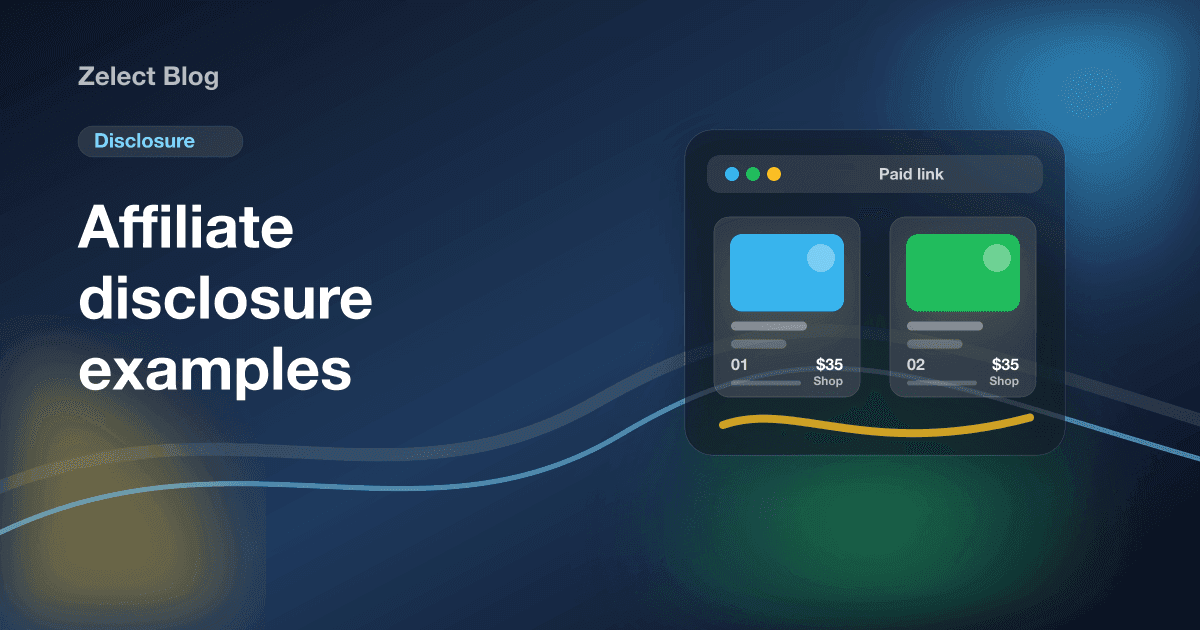
A good affiliate disclosure example is the one the FTC suggests itself: "I get commissions for purchases made through links in this post." An affiliate disclosure tells people, in plain words and right next to your recommendation, that you earn money when they buy through your link. If you're an Amazon Associate, you also need Amazon's own line: "As an Amazon Associate I earn from qualifying purchases."
Below are copy-ready examples for each place you share links, the rules behind them and the mistakes that make a disclosure fail. This is general guidance based on the FTC's public pages and Amazon's agreement, checked October 2026, not legal advice. If you work outside the US, check your country's advertising rules too.
What does the FTC require in an affiliate disclosure?
The FTC's rule of thumb is that people should see and understand the disclosure before they act. Its guide for influencers and its Endorsement Guides FAQ give the details:
| The FTC says | What to do |
|---|---|
| Place the disclosure with the endorsement message itself | Put it in the post, next to the link |
| Disclosures only on an About Me or profile page are likely to be missed | A bio disclosure is extra, not enough on its own |
| Don't mix your disclosure into a group of hashtags or links | Write it as a sentence, near the top |
| In video, disclose in the video, not just the description | Say it out loud and show it on screen |
| In live streams, repeat it periodically | Say it again every so often |
| On Stories and images, superimpose it with time to read | Put the text on the Story itself |
| "Affiliate link" alone might not be understood | Add plain words about earning a commission |
| "Paid link" next to the link should be adequate | Short labels work when they sit beside the link |
The FTC also says a single disclosure on your home page isn't enough, and neither is a button labeled DISCLOSURE that people have to click.
What are good affiliate disclosure examples to copy?
Pick the one that fits the format, and keep it close to the link.
Instagram or TikTok caption:
I earn a commission if you buy through the link in my bio.
Story or Reel text on screen:
Paid link: I earn from purchases
YouTube video, said out loud near the start:
Some links in the description are affiliate links, so I get a commission if you buy, at no extra cost to you.
YouTube description, above the links:
I get commissions for purchases made through the links below.
Blog post or newsletter, before the first link:
This post contains affiliate links. If you buy through them, I earn a commission.
WhatsApp or Telegram deal message:
Affiliate link, I earn a commission on purchases: [link]
Storefront or bio page header:
I earn a commission on purchases made through the links on this page.
Only say "at no extra cost to you" if your program confirms the link doesn't change the price.
What is the Amazon affiliate disclosure?
Amazon's Associates Operating Agreement requires this statement, or "any substantially similar statement previously allowed":
As an Amazon Associate I earn from qualifying purchases.
It has to appear "clearly and prominently," and the agreement defines your site to include social media content. In practice, that means the line goes on your blog, your storefront and the posts where you share Amazon links. The Amazon line is the program's requirement. You still need the FTC-style disclosure next to each recommendation. The two can be combined:
I earn a commission if you buy through these links. As an Amazon Associate I earn from qualifying purchases.
Other programs have their own terms. Read the disclosure section of each program you join, such as Shopee or AliExpress, before you post.
Which affiliate disclosures don't work?
These are the most common mistakes:
- Only in the bio. The FTC is clear that profile-only disclosures get missed.
- Hidden in hashtags. "#ad" at the end of 20 hashtags doesn't count as clear.
- Behind "more." If people have to tap to see it, many won't.
- Vague words. The FTC lists "sp," "spon" and "collab" as confusing, and a bare "thanks" to a brand isn't a disclosure.
- Only in the video description. For videos, it should be in the video itself.
How do you disclose on a storefront or link in bio page?
A storefront page is where people land after "link in bio," so put a one-line disclosure at the top, where it shows before the products. Then keep disclosing in each post, since that's where the recommendation happens.
Zelect is our product, so here's how it applies there. Each Zelect storefront has a description field. Write your disclosure there, plus the Amazon line if you're an Associate. Every product card sends the visitor to your own affiliate link on the store, and Zelect takes no commission. The Free plan holds 25 products in 3 categories.
For the platform-specific side, our guides cover affiliate links on Instagram, promoting affiliate links on YouTube and sharing affiliate links on WhatsApp, each with its own disclosure tips.
Your next step: copy the example for your main platform into your caption template, so every post starts with it. If you're building a page for your links, create a free Zelect storefront and put your disclosure in its description before you add the first product.
Frequently asked questions
What is an affiliate disclosure?
An affiliate disclosure is a short, clear statement telling people you earn money when they buy through your link. In the US, the FTC expects it whenever you have a financial relationship with what you recommend, and affiliate programs such as Amazon Associates require their own statement too.
What is a good affiliate disclosure example?
The FTC itself suggests: "I get commissions for purchases made through links in this post." It works because it's plain, says what you get and sits next to the links. Shorter versions like "Paid link" next to a link are also described by the FTC as adequate.
What does Amazon require in an affiliate disclosure?
Amazon's Associates Operating Agreement requires the statement "As an Amazon Associate I earn from qualifying purchases," or a substantially similar one previously allowed, shown clearly and prominently. The agreement's definition of your site includes social media content.
Is a disclosure in my bio or on one page enough?
No. The FTC says disclosures that appear only on an About Me or profile page are likely to be missed, and that a single disclosure on a home page won't be sufficient. Put the disclosure with each recommendation, and keep a page-level line as an extra.
Is #affiliate or "affiliate link" enough?
It may not be. The FTC says some people might not understand that "affiliate link" means you're paid for purchases. Pair it with plain words, such as "I earn a commission if you buy through this link."