What Is Affiliate Marketing? How It Works for Creators
Published 5 min read
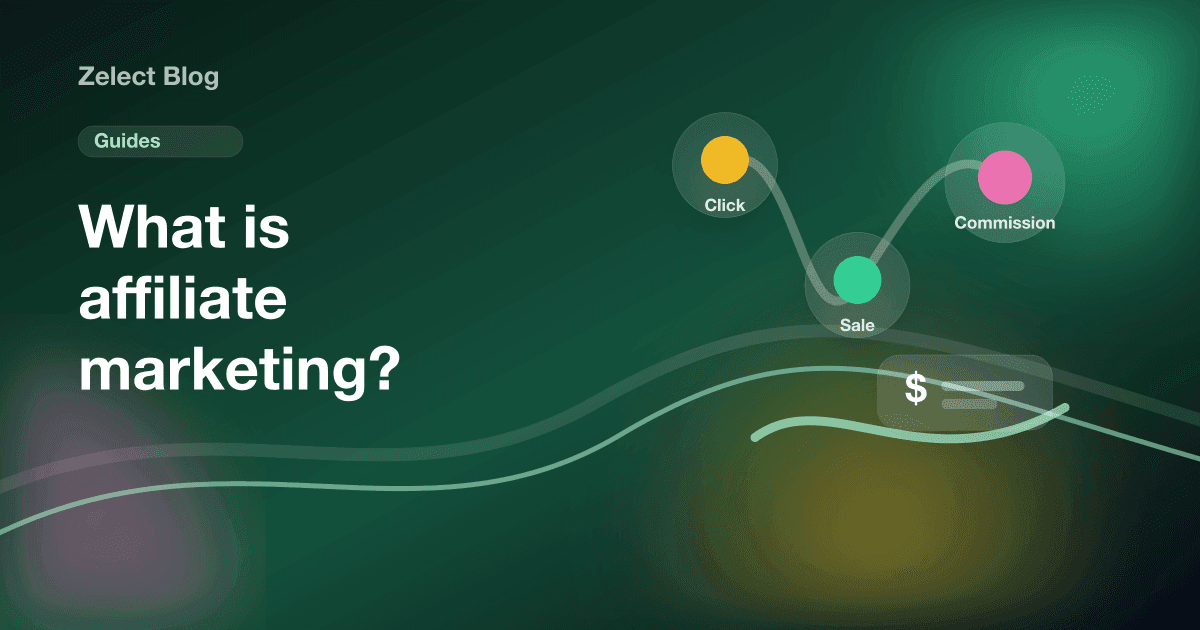
Affiliate marketing is when you recommend another company's product with a special link, and that company pays you a commission when someone buys through it. The link carries your affiliate ID, so the store knows the sale came from you. You don't hold stock, ship anything or handle returns. The store sells and you send it buyers. Creators join a store's own program (like Amazon Associates) or an affiliate network, share their links where their audience already is, and earn a cut of each confirmed sale.
That's the whole model in one paragraph. The rest of this guide explains how the tracking works, who does what, what a beginner can realistically expect and the rules that keep you out of trouble.
How does affiliate marketing work?
Every affiliate sale follows the same five steps:
| Step | What happens | Who does it |
|---|---|---|
| 1. Recommend | You show a product in a video, post, email or message | You |
| 2. Click | A follower taps your link, which carries your ID | Your audience |
| 3. Buy | They buy on the store's site, at the normal price | Your audience |
| 4. Track | The store or network records the sale under your ID | The store or network |
| 5. Pay | You get a percentage once the sale is confirmed | The store or network |
Two details catch most beginners off guard:
- Commissions aren't instant. Stores usually wait until the return window closes before they confirm a sale, and then pay on a schedule.
- Links have a time limit. Tracking usually relies on a cookie with a set lifespan. If the buyer comes back later, on another device or without your link, the sale may not count.
Who is who in affiliate marketing?
- The merchant: the store or brand that sells the product and pays the commission.
- The affiliate: you, the person who recommends it with a tracked link. Also called a publisher or associate.
- The network: a platform that connects many brands with affiliates, gives you links and handles payouts. Not every program uses one: Amazon, for example, runs its own.
- The buyer: your follower, who pays the same price they'd pay without you.
What types of affiliate programs are there?
| Store program | Affiliate network | |
|---|---|---|
| Examples | Amazon Associates, Temu, AliExpress | Platforms that host programs for many brands, like Impact (used by Walmart) |
| Products | That store's whole catalog | Brands that accept your application |
| Sign-up | One per store | One for the network, then one per brand |
| Good for | Starting out, everyday products | Niches with their own brands, like fashion or software |
Most beginners start with one big store program, because it already sells almost everything they'd recommend. Our guides to the Amazon affiliate program, the Walmart affiliate program and our affiliate programs comparison cover sign-up and rates.
How much can you earn with affiliate marketing?
It depends on three things: the commission rate for the product's category, the product's price and how many people buy. Rates vary a lot by program and category, so read each program's current rate table before you plan around a number.
There's no typical income, and you should be wary of anyone who promises one. At the start, most creators make a few sales while they learn what their audience actually buys. What speeds that up is recommending products you really use, in a clear niche, every week. Our list of the best affiliate niches helps you pick yours.
Is affiliate marketing worth it for creators?
It suits creators because it pays you for something you may already do: telling people what you use. Here's the honest trade-off:
What works in its favor
- Free to join most programs, with no stock and no customer service.
- You can start with the audience you have, even a small one.
- One good post can keep earning while people find it later.
What works against it
- You don't control the rates. Programs can change them.
- Tracking misses some sales, for example when people buy later on another device.
- It runs on trust, so promoting products you haven't used costs you more than it pays.
How do you start affiliate marketing as a beginner?
- Pick a niche you already live in: your kitchen, your desk, your skincare routine.
- Join one or two programs where your audience already shops.
- List ten products you use and would recommend to a friend.
- Post useful content: how you use each product, who it's for, what you didn't like.
- Put your links in one place people can find, like the link in your bio.
- Check what gets clicks and make more of that.
The full walk-through is in affiliate marketing for beginners.
What rules do affiliates have to follow?
- Disclose every affiliate link, clearly and close to the recommendation. The FTC's Disclosures 101 for Social Media Influencers explains what that means in the US, and our affiliate disclosure examples give you ready lines.
- Don't hide where a link goes. Amazon's operating policies restrict link shorteners that hide that a link leads to Amazon.
- Don't buy through your own links when a program forbids it.
- Read each program's terms before you post on a new platform.
Where does Zelect fit in?
Zelect is the storefront tool we build, so read this with that in mind. Zelect isn't an affiliate network. It doesn't give you links, sign you up for programs or take any commission. You join the programs you want and paste your own links.
It handles step 5: putting your links in one place. Paste a product link and Zelect builds a card with the photo, name, price and a buy button that goes to the store. Group products into categories, each with its own link, so a post about desk gear can point straight to your Desk section. Buyers check out on the original store.
The Free plan has 1 storefront with 25 products and 3 categories, with no time limit. Pro is $4.90 a month and Ultra $5.90 a month, and Ultra adds click analytics per product. Both paid plans start with a 7-day free trial: cancel before it ends and nothing is charged. If you don't have any programs yet, start there; a storefront helps once you have links.
Got your first links? Start a free Zelect storefront, add your first ten products and put the page in your bio. No card needed.
Frequently asked questions
What is affiliate marketing in simple terms?
You recommend another company's product with a link that carries your ID. When someone buys through that link, the company pays you a commission. The store sells, ships and handles returns; you recommend and send the buyer there.
Do buyers pay more when they use an affiliate link?
No. The buyer pays the same price they would pay without your link. The commission comes out of the store's side of the sale, which is why stores treat affiliates as a sales channel.
Is affiliate marketing legit?
Yes. Large retailers such as Amazon run their own affiliate programs, and many brands pay creators this way. What makes it legit or not is how you do it: disclose every link, recommend products you've actually used and follow each program's rules.
Do I need a website to do affiliate marketing?
Not always. Many programs accept social media profiles, YouTube channels or newsletters as the place you promote. Each program sets its own rules, so check what it accepts when you apply.
How long does it take to get paid?
Usually weeks, not days. Programs confirm a sale only after its return window closes, then pay on a monthly or set schedule, often once you pass a minimum balance. Each program's terms list its exact timing.